PREFACE.
In the year 1860, shortly before leaving England for a long Continental tour, a certain eminent London publisher requested me to make for him some sketches of the great Alpine peaks. At this time I had only a literary acquaintance with mountaineering, and had even not seen—much less set foot upon—a mountain. Amongst the peaks which were upon my list was Mont Pelvoux, in Dauphine. The sketches that were required of it were to celebrate the triumph of some Englishmen who intended to make its ascent. They came—they saw—but they did not conquer. By a mere chance I fell in with a very agreeable Frenchman who accompanied this party, and was pressed by him to return to the assault. In 1861 we did so, with my friend Macdonald, and we conquered. This was the origin of my scrambles amongst the Alps.
The ascent of Mont Pelvoux (including the disagreeables) was a very delightful scramble. The mountain air did not act as an emetic ; the sky did not look black instead of blue; nor did I feel tempted to throw myself over precipices. I hastened to enlarge my experience, and went to the Matterhorn. I was urged toward Mont Pelvoux by those mysterious im-pulses which cause men to peer into the unknown. Not only was this moun-tain reputed to be the highest in France, and on that account was worthy of attention, but it was the dominating point of a most picturesque district of the highest interest, which, to this day, remains almost unexplored. The Matterhorn attracted me simply by its grandeur. It was considered to be the most thoroughly inaccessible of all mountains, even by those who ought to have known better. Stimulated to make fresh exertions by one repulse after another, I returned, year after year, as I had opportunity, more and more determined to find a way up it, or to prove it to be really inaccessible.
A considerable portion of this volume is occupied by the history of these attacks on the Matterhorn, and the other excursions that are described have all some connection, more or less remote, with that mountain or with Mont Pelvoux. All are new excursions (that is, excursions made for the first time), unless the contrary is pointed out. Some have been passed over very briefly, and entire ascents or descents have been disposed of in a single line. If they had been worked out at full length, three volumes instead of one would have been required. Generally speaking, the salient points alone have been dwelt upon, and the rest has been left to the imagination. This treatment has saved the reader from much useless repetition.
In endeavoring to make the book of some use to those who may wish to go mountain-scrambling, whether in the Alps or elsewhere, undue prominence, perhaps, has been given to our mistakes and failures; and it will doubtless be pointed out that our practice must have been bad if the principles which are laid down are sound, or that the principles must be unsound if the prac-tice was good. It is maintained in an early chapter that the positive, or unavoidable, dangers of mountaineering are very small, yet from subsequent pages it can be shown that very considerable risks were run. The reason is obvious—we were not immaculate. Our blunders are not held up to be admired or to be imitated, but to be avoided.
These scrambles amongst the Alps were holiday excursions, and as such they should be judged. They are spoken of as sport, and nothing more. The pleasure that they gave me cannot, I fear, be transferred to others. The ablest pens have failed, and must always fail, to give a true idea of the grand-eur of the Alps. The most minute descriptions of the greatest writers do nothing more than convey impressions that are entirely erroneous—the reader conjures up visions, it may be magnificent ones, but they are infin-itely inferior to the reality. I have dealt sparingly in descriptions, and have employed illustrations freely, in the hope that the pencil may perhaps suc-ceed where the pen must inevitably have failed.
The preparation of the illustrations has occupied a large part of my time during the last six years. With the exception of the views upon pp. 18, 19 and 24, the whole of the illustrations have been engraved expressly for the book, and, unless it is otherwise specified, all are from my own sketches. About fifty have been drawn on the wood by Mr. James Mahoney, and I am much indebted to that artist for the care and fidelity with which he has fol-lowed my slight memoranda, and for the spirit that he has put into his admirable designs. Most of his drawings will be identified by his mono-gram. Twenty of the remainder are the work of Mr. Cyrus Johnston, and out of these I would draw especial attention to the view of the Matterhorn facing p. 36, the striated rock upon p. 63, and the bits from the Mer de Glace upon pp. 138, 139. The illustrations have been introduced as illustra-tions, and very rarely for ornamental purposes. We have subordinated everything in them to accuracy, and it is only fair to the artists who have honored me by their assistance to say that many of their designs would have ranked higher as works of art if they had been subjected to fewer restrictions.
LIST OF ILLUSTRATIONS.
FULL-PAGE ILLUSTRATIONS.
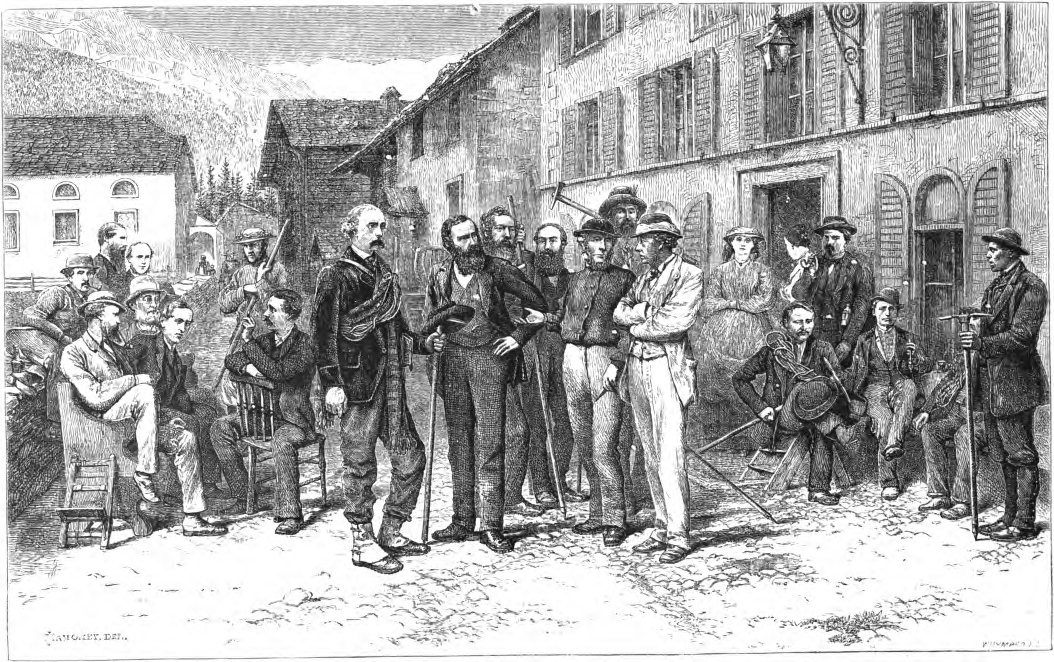
** 1. The Club-room of Zermatt in 1864Frontispiece.
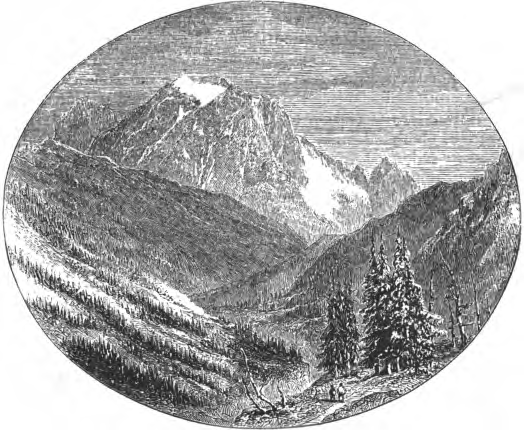
2. Mont Pelvoux and the Aléfroide, from near Mont Dauphin16
* 3. The Mont Cenis Road and the Fell Railway, on the Italian side30
4. The Matterhorn, from near the Summit of the Théodule Pass36
5. “In attempting to pass the corner I slipped and fell”54
** 6. A Cannonade on the Matterhorn (1862)57
7. “The Chimney”64
8. The Crags of the Matterhorn during the Storm, Midnight, Aug. 10, 186371
** 9. Descending Western Arête of the Pointe des Écrins89
** 10. “We saw a toe—it seemed to belong to Moore; we saw Reynaud a flying body”95
** 11. The Summit of the Moming Pass in 1864108
12. The Bergschrund on the Dent Blanche in 1865117
13. The Matterhorn from the Riffelberg121
* 14. The Grandes Jorasses from the Val Ferret133
15. The Summit of the Col Dolent134
16. Fog-Bow, seen from the Matterhorn on July 14, 1865157
IN THE TEXT.
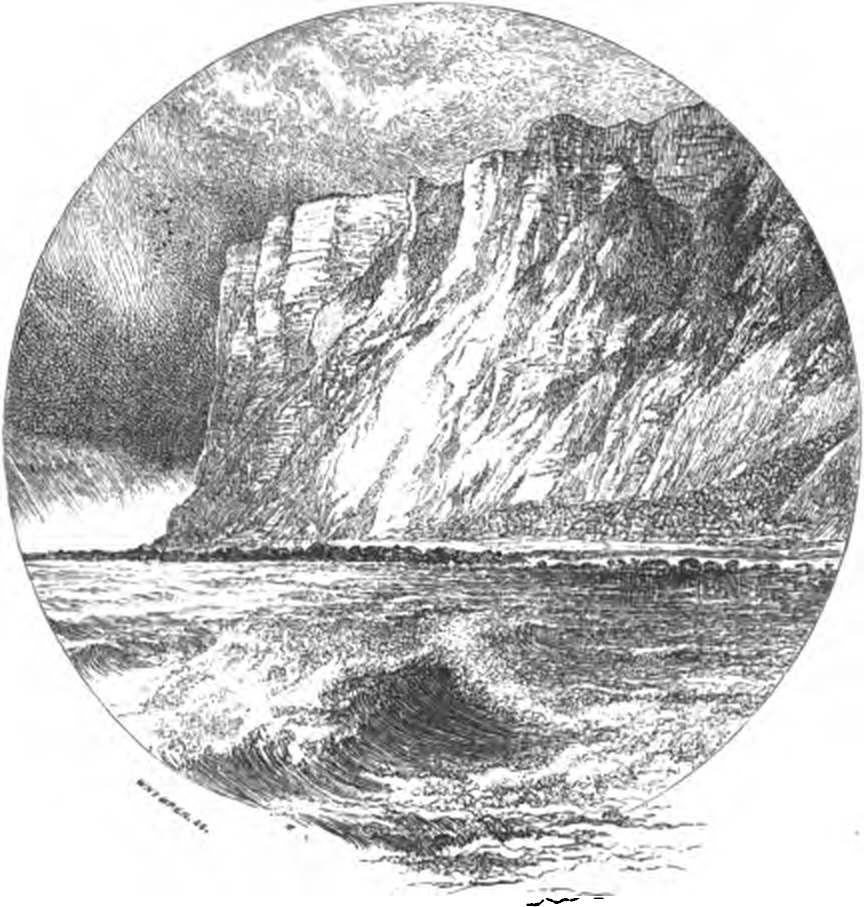
1. Beachy Head9
2. The Devil of Notre Dame10
** 3. Mules10
** 4. A Curé in Difficulties13
5. At the St. Bernard13
** 6. Which is the Brute?13
** 7. “Garibaldi !”15
* 8. Briançon16
9. Mont Pelvoux from above La Bessée18
10. In the Val d’Alefred19
11. The Grand Pelvoux de Val Louise20
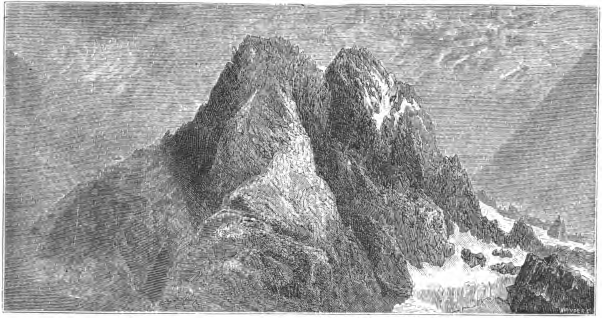
12. Buttresses of Mont Pelvoux21
* 13. Portrait of R. J. S. Macdonald23
14. Outline to show Route up Mont Pelvoux24
15. The Blanket Bag27
16. Natural Pillar near Molines29
** 17. Crossing Mont Cenis30
** 18. The Little Postilion31
19. The Centre Rail on a Curve32
20. Section of the Fell Railway32
* 21. The Covered Ways of the Fell Railway33
22. The Centre-Rail Brake34
23. Outlines of the Matterhorn from the North-east37
* 24. Portrait of J. J. Bennen38
* 25. Portrait of Jean-Antoine Carrel40
26. The Col du Lion; looking toward the Tête du Lion41
** 27. At Breuil (Giomein)44
28. Outlines of the Matterhorn from the Théodule Pass46
29. Diagram to show manner of fastening Tent-poles47
30. Alpine Tent47
31. Climbing Claw51
32. Rope and Ring51
33. The Matterhorn from Breuil58
** 34. “But what is this?”59
35. An Arch of the Aqueduct in the Val Tournanche61
* 36. Water-worn Rocks in the Gorge below the Gorner Glacier62
37. Striations Produced by Glacier-action63
** 38. “Carrel lowered me down”67
* 39. Portrait of Monsieur Favre73
* 40. Crossing the Channel74
** 41. A Night with Croz75
* 42. Portrait of Michel-Auguste Croz76
43. The Aiguilles d’Arve from above the Chalets of Rieu Blanc78
* 44. Portrait of Melchior Anderegg81
45. Map of the Brèche de la Meije, etc.82
* 46. The Vallon des Étançons83
47. Map of the Central Dauphiné Alps84
48. The Pointe des Écrins from the Col du Galibier86
49. Outline to show Route up Pointe des Écrins86
50. Fragment from the Summit of the Pointe des Écrins88
** 51. A Snow Couloir93
** 52. Portraits of Mr. Reilly on a wet Day99
53. Our Camp on Mont Suc100
54. Ice-Avalanche on the Moming Pass108
55. Fac-simile of a Letter from Croz112
56. Part of the Southern Ridge of the Grand Cornier113
57. Part of the Northern Ridge of the Grand Cornier114
* 58. Portrait of Leslie Stephen116
* 59. Portrait of T. S. Kennedy119
60. Diagrams to show Dip of Strata on the Matterhorn122–3
* 61. My Tent-bearer—The Hunchback125
* 62. The Bouquetin127
63. A Crétin of Aosta129
64. My Ice-axe135
65. Kennedy Ice-axe136
66. Stephen Ice-axe136
67. Crampon136
* 68. Portrait of Christian Almer137
* 69. On the Mer de Glace138
* 70. Ice-Pinnacles on the Mer de Glace139
* 71. Western Side of the Col de Talèfre142
** 72. Glissading143
** 73. The Wrong Way to use a Rope on Glacier146
** 74. The Right Way to use a Rope on Glacier146
75. “Croz! Croz! Come here”153
76. The Actual Summit of the Matterhorn in 1865154
77. The Summit of the Matterhorn155
78. Rope broken on the Matterhorn157
* 79. Portrait of Monsieur Seiler158
80. Manilla Rope broken on the Matterhorn159
81. The “Second” Rope broken on the Matterhorn160
** 82. The End162
83. Natural Pinnacles in the Valley of the Durance163
CONTENTS.
I.—Introductory9
II.—The Ascent of Mont Pelvoux16
III.—The Mont Cenis Pass and the Fell Railway—The Great Tunnel through the Alps30
IV.—My First Scramble on the Matterhorn35
V.—Renewed Attempts to ascend the Matterhorn44
VI.—The Val Tournanche—The Breuiljoch—Zermatt—Ascent of the Grand Tournalin59
VII.—Our Sixth Attempt to ascend the Matterhorn69
VIII.—From St. Michel to La Bérarde by the Col des Aiguilles, d’Arve, Col de Martignare, and the Brèche de la Meije75
IX.—The Ascent of the Pointe des Écrins83
X.—From Val Louise to La Bérarde by the Col de Pilatte91
XI.—Passage of the Col de Triolet, and Ascents of Mont Dolent, Aiguille de Trélatête and Aiguille d’Argentière96
XII.—The Moming Pass—Zermatt105
XIII.—The Ascent of the Grand Cornier110
XIV.—The Ascent of the Dent Blanche116
XV.—Lost on the Col d’Hérens—Seventh Attempt to ascend the Mat- terhorn119
XVI.—On the Valley of Aosta, and the Ascent of the Grandes Jorasses126
XVII.—The Col Dolent133
XVIII.—Ascent of the Aiguille Verte137
XIX.—The Col de Talèfre142
XX.—Ascent of the Ruinette—The Matterhorn144
XXI.—The Ascent of the Matterhorn150
XXII.—The Descent of the Matterhorn155
Appendix162
Scrambles Amongst the Alps
CHAPTER I.
ON the 23d of July, 1860, I started for my first tour in the Alps. As we steamed out into the Channel, Beachy Head came into view, and re-called a scramble of many years ago. With the impudence of ignorance, my brother and I, schoolboys both, had tried to scale that great chalk cliff. Not the head itself—where sea-birds circle, and where the flints are ranged so or-derly in parallel lines—but at a place more to the east, where the pinnacle called the Devil’s Chimney had fallen down. Since that time we have been often in dangers of different kinds, but never have we more nearly broken our necks than upon that occasion.
In Paris I made two ascents. The first to the seventh floor of a house in the Quartier Latin—to an artist friend, who was engaged, at the moment of my
entry, in combat with a little Jew. He hurled him with great good-will and with considerable force into some of his crockery, and then recommended me to go up the towers of Notre Dame. Half an hour later I stood on the parapet of the great west front, by the side of the leering fiend which for cen-turies has looked down upon the great city. It looked over the Hôtel Dieu to a small and commonplace building, around which there was always a mov-ing crowd. To that building I descend-ed. It was filled with chattering women and eager children, who were strug-gling to get a good sight of three corpses which were exposed to view. It was the Morgue. I quitted the place dis-gusted, and overheard two women dis-cussing the spectacle. One of them concluded with, “But that it is droll ;” the other answered approvingly, “But that it is droll ;” and the Devil of Notre Dame, looking down upon them, seemed to say, “Yes, your climax, the cancan—your end, not uncommonly, that build-ing: it is droll, but that it is droll.”
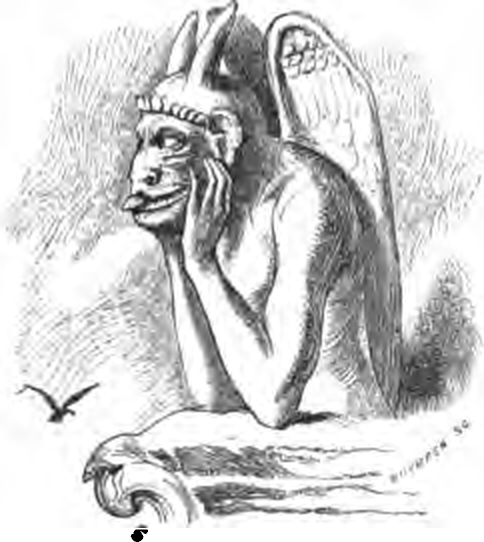
I passed on to Switzerland ; saw the sunlight lingering on the giants of the Oberland ; heard the echoes from the cow-horns in the Lauterbrunnen valley and the avalanches rattling off the Jung-frau ; and then crossed the Gemmi into the Valais, resting for a time by the beautiful Oeschinen See, and getting a forcible illustration of glacier-motion in a neighboring valley — the Gasteren Thal. The upper end of this valley is crowned by the Tschingel glacier, which, as it descends, passes over an abrupt cliff that is in the centre of its course. On each side the continuity of the gla-cier is maintained, but in the centre it is cleft in twain by the cliff. Lower down it is consolidated again. I scram-bled on to this lower portion, advanced toward the cliff, and then stopped to admire the contrast of the brilliant pin-nacles of ice with the blue sky. With-out a warning, a huge slice of the gla-cier broke away and fell over the cliff on to the lower portion with a thunder-ing crash. Fragments rolled beyond me, although, fortunately, not in my direction. I fled, and did not stop until off the glacier, but before it was quitted learned another lesson in glacial mat-ters : the terminal moraine, which seem-ed to be a solid mound, broke away underneath me, and showed that it was only a superficial covering resting on a slope of glassy ice.
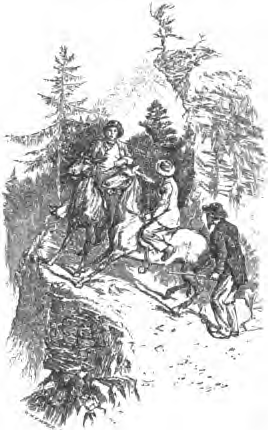
On the steep path over the Gemmi there were opportunities for observing the manners and customs of the Swiss mule. It is not perhaps in revenge for generations of ill-treatment that the mule grinds one’s legs against fences and stone walls, and pretends to stum-ble in awkward places, particularly
when coming round corners and on the brinks of precipices ; but their evil habit of walking on the outside edges of paths (even in the most unguarded positions) is one that is distinctly the result of as-sociation with man. The transport of wood from the mountains into the val-leys occupies most of the mules during a considerable portion of the year : the fagots into which the wood is made up project some distance on each side, and it is said that they walk intuitively to the outside of paths having rocks on the other side to avoid the collisions which would otherwise occur. When they carry tourists they behave in a similar manner ; and no doubt when the good time for mules arrives, and they no longer carry burdens, they will still continue, by natural selection, to do the same. This habit frequently gives rise to scenes : two mules meet—each wishes to pass on the outside, and neither will give way. It requires con-siderable persuasion, through the me-dium of the tail, before such difficulties are arranged.
I visited the baths of Leuk, and saw the queer assemblage of men, women and children, attired in bathing-gowns, chatting, drinking and playing at chess in the water. The company did not seem to be perfectly sure whether it was decorous in such a situation and in such attire for elderly men to chase young females from one corner to another, but it was unanimous in howling at the ad-vent of a stranger who remained cov-ered, and literally yelled when I depart-ed without exhibiting my sketch.
I trudged up the Rhone valley, and turned aside at Visp to go up the Visp Thal, where one would expect to see greater traces of glacial action, if a glacier formerly filled it, as one is said to have done.
I was bound for the valley of Saas, and my work took me high up the Alps on either side, far beyond the limit of trees and the tracks of tourists. The view from the slopes of the Wiessmies, on the eastern side of the valley, five or six thousand feet above the village of Saas, is perhaps the finest of its kind in the Alps. The full height of the three-peaked Mischabel (the highest mountain in Switzerland) is seen at one glance—eleven thousand feet of dense forests, green alps, pinnacles of rock and glittering glaciers. The peaks seemed to me then to be hopelessly inaccessible from this direction.
I descended the valley to the village of Stalden, and then went up the Visp Thal to Zermatt, and stopped there sev-eral days. Numerous traces of the for-midable earthquake-shocks of five years before still remained, particularly at St. Nicholas, where the inhabitants had been terrified beyond measure at the destruction of their churches and houses. At this place, as well as at Visp, a large part of the population was obliged to live under canvas for several months. It is remarkable that there was hardly a life lost on this occasion, although there were about fifty shocks, some of which were very severe.
At Zermatt I wandered in many di-rections, but the weather was bad and my work was much retarded. One day, after spending a long time in attempts to sketch near the Hörnli, and in futile endeavors to seize the forms of the peaks as they for a few seconds peered out from above the dense banks of woolly clouds, I determined not to re-turn to Zermatt by the usual path, but to cross the Görner glacier to the Riffel hotel. After a rapid scramble over the polished rocks and snow-beds which skirt the base of the Theodule glacier, and wading through some of the streams which flow from it, at that time much swollen by the late rains, the first dif-ficulty was arrived at, in the shape of a precipice about three hundred feet high. It seemed that there would be no dif-ficulty in crossing the glacier if the cliff could be descended, but higher up and lower down the ice appeared, to my in-experienced eyes, to be impassable for a single person. The general contour of the cliff was nearly perpendicular, but it was a good deal broken up, and there was little difficulty in descending by zigzagging from one mass to another. At length there was a long slab, nearly
smooth, fixed at an angle of about forty degrees between two wall-sided pieces of rock : nothing, except the glacier, could be seen below. It was a very awkward place, but being doubtful if return were possible, as I had been dropping from one ledge to another, I passed at length by lying across the slab, putting the shoulder stiffly against one side and the feet against the other, and gradually wriggling down, by first moving the legs and then the back. When the bot-tom of the slab was gained a friendly crack was seen, into which the point of the bâton could be stuck, and I dropped down to the next piece. It took a long time coming down that little bit of cliff, and for a few seconds it was satisfactory to see the ice close at hand. In another moment a second difficulty presented itself. The glacier swept round an angle of the cliff, and as the ice was not of the nature of treacle or thin putty, it kept away from the little bay on the edge of which I stood. We were not widely separated, but the edge of the ice was higher than the opposite edge of rock ; and worse, the rock was covered with loose earth and stones which had fallen from above. All along the side of the cliff, as far as could be seen in both directions, the ice did not touch it, but there was this marginal crevasse, seven feet wide and of unknown depth.
All this was seen at a glance, and almost at once I concluded that I could not jump the crevasse, and began to try along the cliff lower down, but with-out success, for the ice rose higher and higher, until at last farther progress was stopped by the cliffs becoming perfectly smooth. With an axe it would have been possible to cut up the side of the ice —without one, I saw there was no alter-native but to return and face the jump.
It was getting toward evening, and the solemn stillness of the High Alps was broken only by the sound of rush-ing water or of falling rocks. If the jump should be successful, well : if not, I fell into that horrible chasm, to be frozen in, or drowned in that gurgling, rushing water. Everything depended on that jump. Again I asked myself, “Can it be done ?” It must be. So, finding my stick was useless, I threw it and the sketch-book to the ice, and first retreating as far as possible, ran forward with all my might, took the leap, barely reached the other side, and fell awk-wardly on my knees. Almost at the same moment a shower of stones fell on the spot from which I had jumped.
The glacier was crossed without fur-ther trouble, but the Riffel, which was then a very small building, was cram-med with tourists, and could not take me in. As the way down was unknown to me, some of the people obligingly suggested getting a man at the chalets, otherwise the path would be certainly lost in the forest. On arriving at the chalets no man could be found, and the lights of Zermatt, shining through the trees, seemed to say, “Never mind a guide, but come along down : we’ll show you the way ;” so off I went through the forest, going straight toward them. The path was lost in a moment, and was never recovered : I was tripped up by pine roots, I tumbled over rhododen-dron bushes, I fell over rocks. The night was pitch-dark, and after a time the lights of Zermatt became obscure or went out altogether. By a series of slides or falls, or evolutions more or less disagreeable, the descent through the forest was at length accomplished, but torrents of a formidable character had still to be passed before one could ar-rive at Zermatt. I felt my way about for hours, almost hopelessly, by an ex-haustive process at last discovering a bridge, and about midnight, covered with dirt and scratches, re-entered the inn which I had quitted in the morning.
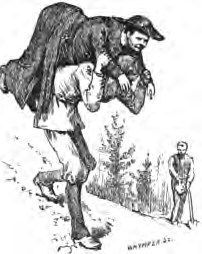
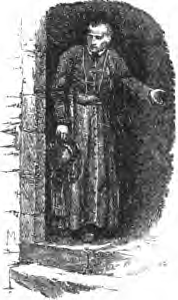
Others besides tourists got into dif-ficulties. A day or two afterward, when on the way to my old station near the Hörnli, I met a stout curé who had es-sayed to cross the Theodule pass. His strength or his wind had failed, and he was being carried down, a helpless bun-dle and a ridiculous spectacle, on the back of a lanky guide, while the peas-ants stood by with folded hands, their reverence for the Church almost over-come by their sense of the ludicrous.
I descended the valley, diverging from the path at Randa to mount the slopes of the Dom (the highest of the Mischa-belhörner), in order to see the Weiss-horn face to face. The latter mountain is the noblest in Switzerland, and from this direction it looks especially magnif-icent. On its north there is a large snowy plateau that feeds the glacier of which a portion is seen from Randa, and which on more than one occasion has destroyed that village. From the direction of the Dom—that is, immedi-ately opposite—this Bies glacier seems to descend nearly vertically : it does not do so, although it is very steep. Its size is much less than formerly, and the lower portion, now divided into three tails, clings in a strange, weird-like manner to the cliffs, to which it seems scarcely possible that it can re-main attached.
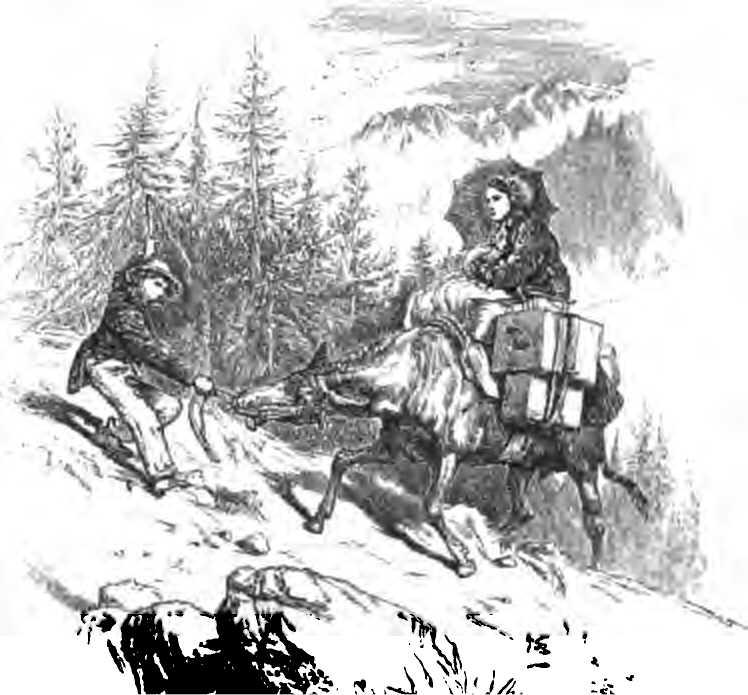
Unwillingly I parted from the sight of this glorious mountain, and went down to Visp. A party of English tourists had passed up the valley a short time before with a mule. The party num-bered nine—eight women and a governess. The mule carried their luggage, and was ridden by each in turn. The peasants—themselves not unaccustomed to overload their beasts—were struck with astonishment at the unwont-ed sight, and made comments, more free than welcome to English ears, on the nonchalance with which young miss sat, calm and collected, on the miserable beast, while it was struggling under her weight combined with that of the luggage. The story was often repeated ; and it tends to sustain some of the hard things which have been said of late about young ladies from the ages of twelve or fourteen to eighteen.
Arriving once more in the Rhone valley, I proceeded to Viesch, and from thence ascended the Æggischhorn, on which unpleas-ant eminence I lost my way in a fog, and my temper shortly afterward. Then, after crossing the Grimsel in a severe thunder-storm, I passed on to Brienz, Interlachen and Berne, and thence to Fri-bourg and Mo-rat, Neuchâtel, Martigny and the St. Bernard. The massive walls of the convent were a welcome sight as I waded through the snow-beds near the summit of the pass, and pleasant also was the courteous salutation of the
brother who bade me enter. He won-dered at the weight of my knapsack, and I at the hardness of their bread. The saying that the monks make the toast in the winter that they give to tourists in the following season is not founded on truth : the winter is their most busy time of the year. But it is true they have exercised so much hos-pitality that at times they have not pos-sessed the means to furnish the fuel for heating their chapel in the winter.
Instead of descending to Aosta, I turned aside into the Val Pelline, in or-der to obtain views of the Dent d’Erin. The night had come on before Biona was gained, and I had to knock long and loud upon the door of the curé’s house be-fore it was opened. An old woman with querulous voice and with a large goître answered the summons, and demanded rather sharply what was wanted, but be-came pacific, almost good-natured, when a five-franc piece was held in her face and she heard that lodging and supper were requested in exchange.
My directions asserted that a passage existed from Prerayen, at the head of this valley, to Breuil, in the Val Tour-nanche, and the old woman, now con-vinced of my respectability, busied her-self to find a guide. Presently she in-troduced a native picturesquely attired in high-peaked hat, braided jacket, scarlet waistcoat and indigo pantaloons, who agreed to take me to the village of Val Tournanche. We set off early on the next morning, and got to the summit of the pass without difficulty. It gave me my first experience of con-siderable slopes of hard, steep snow, and, like all beginners, I endeavored to prop myself up with my stick, and kept it outside, instead of holding it between myself and the slope, and leaning upon it, as should have been done. The man enlightened me, but he had, properly, a very small opinion of his employer, and it is probably on that account that, a few minutes after we had passed the summit, he said he would not go any farther and would return to Biona. All argument was useless : he stood still, and to every-thing that was said answered nothing but that he would go back. Being rather nervous about descending some long snow-slopes which still intervened between us and the head of the valley, I offered more pay, and he went on a little way. Presently there were some cliffs, down which we had to scramble. He called to me to stop, then shouted that he would go back, and beckoned to me to come up. On the contrary, I waited for him to come down, but in-stead of doing so, in a second or two he turned round, clambered deliberately up the cliff and vanished. I supposed it was only a ruse to extort offers of more money, and waited for half an hour, but he did not appear again. This was rather embarrassing, for he carried off my knapsack. The choice of action lay between chasing him and going on to Breuil, risking the loss of my knapsack. I chose the latter course, and got to Breuil the same evening. The landlord of the inn, suspicious of a person entirely innocent of luggage, was doubtful if he could admit me, and eventually thrust me into a kind of loft, which was already occupied by guides and by hay. In later years we became good friends, and he did not hesitate to give credit and even to advance con-siderable sums.
My sketches from Breuil were made under difficulties : my materials had been carried off, nothing better than fine sugar-paper could be obtained, and the pencils seemed to contain more silica than plumbago. However, they were made, and the pass was again crossed, this time alone. By the fol-lowing evening the old woman of Biona again produced the faithless guide. The knapsack was recovered after the lapse of several hours, and then I poured forth all the terms of abuse and re-proach of which I was master. The man smiled when called a liar, and shrugged his shoulders when referred to as a thief, but drew his knife when spoken of as a pig.
The following night was spent at Cor-mayeur, and the day after I crossed the Col Ferrex to Orsiéres, and on the next
the Tête Noir to Chamounix. The Em-peror Napoleon arrived the same day, and access to the Mer de Glace was refused to tourists ; but, by scrambling along the Plan des Aiguilles, I managed to outwit the guards, and to arrive at the Montanvert as the imperial party was leaving, failing to get to the Jardin the same afternoon, but very nearly succeeding in breaking a leg by dis-lodging great rocks on the moraine of the glacier.
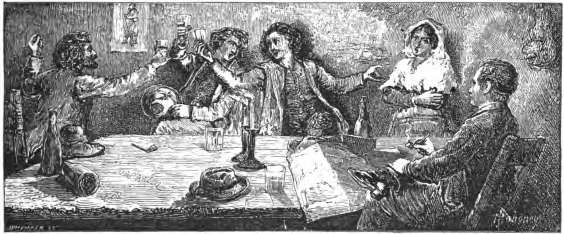
From Chamounix I went to Geneva, and thence by the Mont Cenis to Turin and to the Vaudois valleys. A long and weary day had ended when Paes-ana was reached. The inn was full, and I was tired and about to go to bed when some village stragglers entered and began to sing. They sang to Gari-baldi ! The tenor, a ragged fellow, whose clothes were not worth a shilling, took the lead with wonderful expression and feeling. The others kept their places and sang in admirable time. For hours I sat enchanted, and long after I retired the sound of their melody could be heard, relieved at times by the treble of the girl who belonged to the inn.
The next morning I passed the little lakes which are the sources of the Po, on my way into France. The weather was stormy, and misinterpreting the patois of some natives—who in reality pointed out the right way—I missed the track, and found myself under the cliffs of Monte Viso. A gap that was occa-sionally seen in the ridge connecting it with the mountains to the east tempted me up, and after a battle with a snow-slope of excessive steepness, I reached the summit. The scene was extraordi-nary, and, in my experience, unique. To the north there was not a particle of mist, and the violent wind coming from that direction blew one back stag-gering. But on the side of Italy the valleys were completely filled with dense masses of cloud to a certain level ; and there—where they felt the influence of the wind—they were cut off as level as the top of a table, the ridges appearing above them.
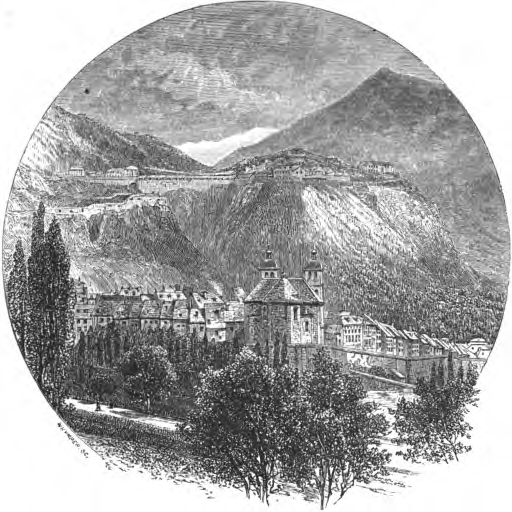
I raced down to Abries, and went on through the gorge of the Guil to Mont Dauphin. The next day found me at La Bessée, at the junction of the Val Louise with the valley of the Du-rance, in full view of Mont Pelvoux ; and by chance I walked into a cabaret where a Frenchman was breakfasting who a few days before had made an un-successful attempt to ascend that moun-tain with three Englishmen and the guide Michel Croz of Chamounix — a right good fellow, by name Jean Reynaud.
The same night I slept at Briançon, intending to take the courier on the fol-lowing day to Grenoble, but all places had been secured several days before-hand, so I set out at two p. m. on the next day for a seventy-mile walk. The weather was again bad, and on the summit of the Col de Lautaret I was forced to seek shelter in the wretched little hospice. It was filled with work-men who were employed on the road, and with noxious vapors which proceed-ed from them. The inclemency of the
weather was preferable to the inhospi-tality of the interior. Outside, it was disagreeable, but grand—inside, it was disagreeable and mean. The walk was continued under a deluge of rain, and I felt the way down, so intense was the darkness, to the village of La Grave, where the people of the inn detained me forcibly. It was perhaps fortunate that they did so, for during that night blocks of rock fell at several places from the cliffs on to the road with such force that they made large holes in the macadam, which looked as if there had been explosions of gunpowder. I re-sumed the walk at half-past five next morning, and proceeded, under steady rain, through Bourg d’Oysans to Gren-oble, arriving at the latter place soon after seven p. m., having accomplished the entire distance from Briançon in about eighteen hours of actual walking.
This was the end of the Alpine por-tion of my tour of 1860, on which I was introduced to the great peaks, and ac-quired the passion for mountain-scram-bling the development of which is described in the following chapters.
CHAPTER II.
THE ASCENT OF MONT PELVOUX.
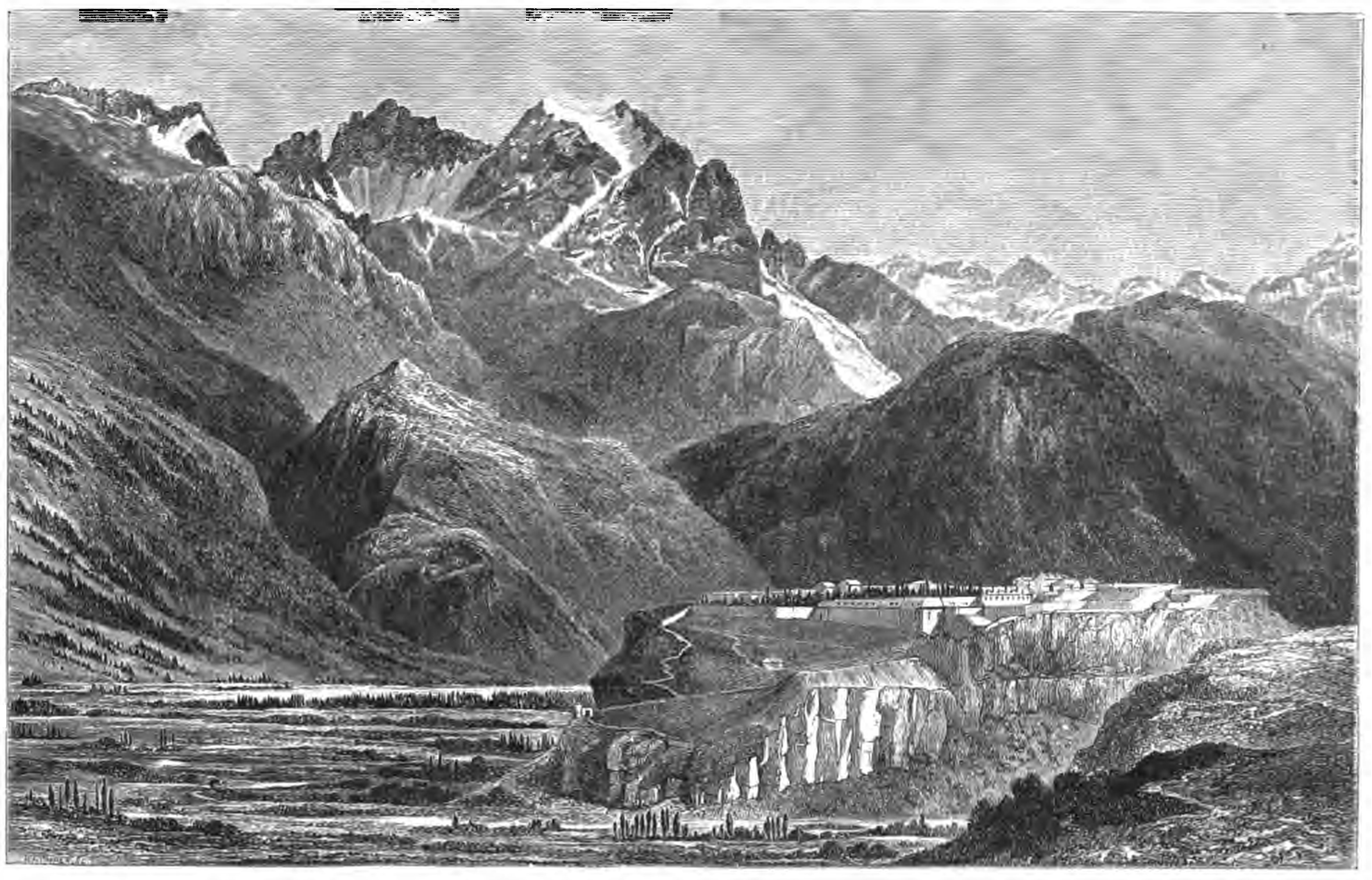
The district of which Mont Pelvoux and the neighboring summits are the culminating points is, both historically and topographically, one of the most interesting in the Alps. As the nursery and the home of the Vaudois, it has claims to permanent attention : the names of Waldo and of Neff will be remembered when men more famous in their time are forgotten, and the memory of the heroic courage and the simple piety of their disciples will en-dure as long as history lasts.
This district contains the highest sum-mits in France, and some of its finest scenery. It has not perhaps the beau-ties of Switzerland, but has charms of its own : its cliffs, its torrents and its gorges are unsurpassed, its deep and savage valleys present pictures of gran-
deur, and even sublimity, and it is second to none in the boldness of its mountain forms.
The district includes a mass of val-leys which vie with each other in singu-larity of character and dissimilarity of climate. Some the rays of the sun can never reach, they are so deep and nar-row. In others the very antipodes may be found, the temperature more like that of the plains of Italy than of alpine France. This great range of climate has a marked effect on the flora of these valleys : sterility reigns in some, stones take the place of trees, débris and mud replace plants and flowers : in others, in the space of a few miles, one passes vines, apple, pear and cherry trees, the birch, alder, walnut, ash, larch and pine alternating with fields of rye, barley, oats, beans and potatoes.
The valleys are for the most part short and erratic. They are not, ap-parently, arranged on any definite plan : they are not disposed, as is frequently the case elsewhere, either at right angles to, or parallel with, the highest sum-mits, but they wander hither and thither, taking one direction for a few miles, then doubling back, and then perhaps resuming their original course. Thus long perspectives are rarely to be seen, and it is difficult to form a general idea of the disposition of the peaks.
The highest summits are arranged almost in a horse-shoe form. The high-est of all, which occupies a central po-sition, is the Pointe des Écrins ; the second in height, the Meije, is on the north ; and the Mont Pelvoux, which gives its name to the entire block, stands almost detached by itself on the outside.
At the beginning of July, 1861, I des-patched to Reynaud from Havre blank-ets (which were taxed as “prohibited fabrics”), rope, and other things desi-rable for the excursion, and set out on the tour of France, but four weeks later, at Nîmes, found myself completely col-lapsed by the heat, then 94° Fahr. in the shade, so I took a night train at once to Grenoble.
I lost my way in the streets of this picturesque but noisome town, and hav-ing but a half hour left in which to get a dinner and take a place in the dili-gence, was not well pleased to hear that an Englishman wished to see me. It turned out to be my friend Macdon-ald, who confided to me that he was going to try to ascend a mountain call-ed Pelvoux in the course of ten days, but on hearing of my intentions agreed to join us at La Bessée on the 3d of August. In a few moments more I was perched in the banquette en route for Bourg d’Oysans, in a miserable vehicle which took nearly eight hours to ac-complish less than thirty miles.
At five on a lovely morning I shoul-dered my knapsack and started for Briançon. Gauzy mists clung to the mountains, but melted away when touched by the sun, and disappeared by jerks (in the manner of views when focused in a magic lantern), revealing the wonderfully bent and folded strata in the limestone cliffs behind the town. Then I entered the Combe de Malval, and heard the Romanche eating its way through that wonderful gorge, and pass-ed on to Le Dauphin, where the first glacier came into view, tailing over the mountain-side on the right. From this place until the summit of the Col de Lautaret was passed, every gap in the mountains showed a glittering glacier or a soaring peak : the finest view was at La Grave, where the Meije rises by a series of tremendous precipices eight thousand feet above the road. The finest distant view of the pass is seen after crossing the col, near Monêtier. A mountain, commonly supposed to be Monte Viso, appears at the end of the vista, shooting into the sky : in the middle distance, but still ten miles off, is Briançon with its interminable forts, and in the foreground, leading down to the Guisane and rising high up the neighboring slopes, are fertile fields, studded with villages and church-spires. The next day I walked over from Brian-çon to La Bessée, to my worthy friend Jean Reynaud, the surveyor of roads of his district.
All the peaks of Mont Pelvoux are well seen from La Bessée—the highest
point as well as that upon which the French engineers erected their cairn in 1828. Neither Reynaud nor any one else knew this. The natives knew only that the engineers had ascended one peak, and had seen from that a still higher point, which they called the Pointe des Arcines or des Écrins. They could not say whether this latter could be seen from La Bessée, nor could they tell the peak upon which the cairn had been erected. We were under the im-pression that the highest point was con-cealed by the peaks we saw, and would be gained by passing over them. They knew nothing of the ascent of Monsieur world !”—a phrase used by a French-man when in the state in which a Briton begins to shout, “We won’t go home till morning,” national glory being upper-most in the thoughts of one, and home in those of the other. The bâton was produced : it was a branch of a young oak, about five feet long, gnarled and twisted in several directions. “Sir,” said the postmaster, as he presented it, “France ! ’tis the first—the first nation in the world, by its—” He stuck. “Bâtons,” I suggested. “Yes, yes, sir : by its bâtons, by its—its—” and here Puiseux, and they confidently asserted that the highest point of Mont Pelvoux had not been attained by any one : it was this point we wished to reach.
Nothing prevented our starting at once but the absence of Macdonald and the want of a bâton. Reynaud suggested a visit to the postmaster, who possessed a bâton of local celebrity. Down we went to the bureau, but it was closed : we hallooed through the slits, but no answer. At last the postmaster was discovered endeavoring (with very fair success) to make himself intoxi-cated. He was just able to ejaculate, “France ! ’tis the first nation in the he could not get on at all. As I looked at this young limb, I thought of my own ; but Reynaud, who knew every-thing about everybody in the village, said there was not a better one ; so off we went with it, leaving the official staggering in the road, and muttering, “France ! ’tis the first nation in the world !”
The 3d of August came, but Mac-donald did not appear, so we started for the Val Louise, our party consist-ing of Reynaud, myself and a porter, Jean Casimir Giraud, nicknamed “Little
Nails,” the shoemaker of the place. An hour and a half’s smart walking took us to La Ville de Val Louise, our hearts gladdened by the glorious peaks of Pel-voux shining out without a cloud around them. I renewed acquaintance with the mayor of La Ville. His aspect was original and his manners were gracious, but the odor which proceeded from him was dreadful. The same may be said of most of the inhabitants of these valleys.
Reynaud kindly undertook to look after the commissariat, and I found to my annoyance, when we were about to leave, that I had given tacit consent to a small wine-cask being carried with us, which was a great nuisance from the commencement. It was excessively awkward to handle : one man tried to carry it, and then another, and at last it was slung from one of our bâtons, and was carried by two, which gave our party the appearance of a mechanical di-agram to illus-trate the uses of levers.
At La Ville the Val Louise splits into two branches—the Val d’Entrai-gues on the left, and the Vallon d’Alefred (or Ailefroide) on the right : our route was up the latter, and we moved steadily for-ward to the vil-lage of La Pisse, where Pierre Sémiond lived, who was reputed to know more about the Pelvoux than any other man. He looked an honest fellow, but unfor-tunately he was ill and could not come. He recommended his brother, an aged creature, whose furrowed and wrinkled face hardly seemed to announce the man we wanted ; but, having no choice, we engaged him and again set forth.
Walnut and a great variety of other trees gave shadow to our path and fresh vigor to our limbs, while below, in a sublime gorge, thundered the torrent, whose waters took their rise from the snows we hoped to tread on the morrow.
The mountain could not be seen at La Ville, owing to a high intervening ridge : we were now moving along the foot of this to get to the chalets of Ale-fred—or, as they are sometimes called, Aléfroide—where the mountain actually commences. From this di-rection the subordinate but more proximate peaks appear con-siderably higher than the loft-ier ones be-hind, and sometimes com-pletely conceal them. But the whole height of the peak, which in these valleys goes under the name of the “Grand Pel-voux,” is seen at one place from its summit to its base—six or seven thou-sand feet of nearly perpendicular cliffs.
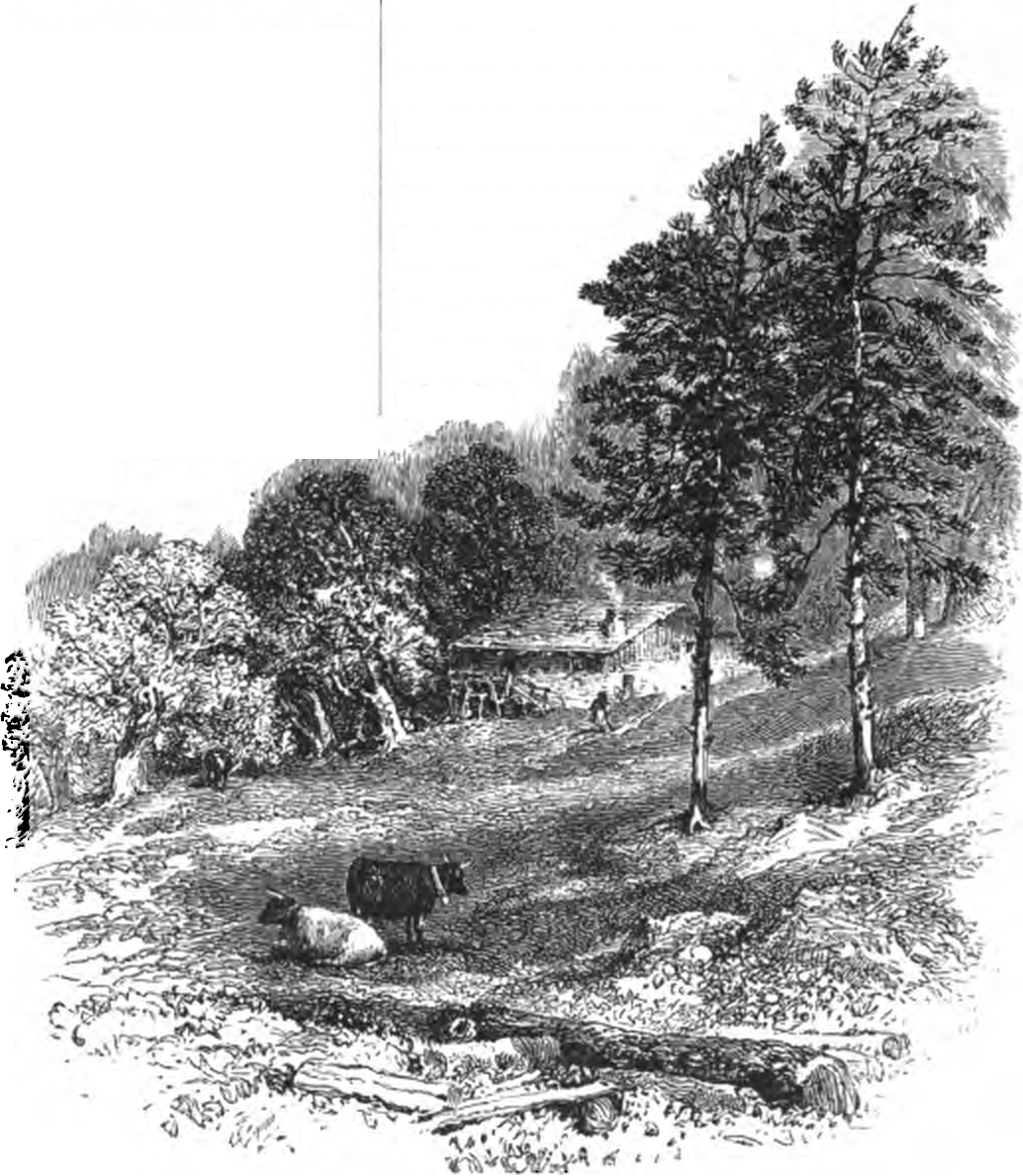
The chalets of Alefred are a cluster of miserable wooden huts at the foot of the Grand Pelvoux, and are close to the junction of the streams which descend from the glacier de Sapenière (or du
Selé) on the left, and the glaciers Blanc and Noir on the right. We rested a minute to purchase some butter and milk, and Sémiond picked up a disre-putable-looking lad to assist in carry-shadows from the mountains. A more frightful and desolate valley it is scarce-ly possible to imagine : it contains miles of boulders, débris, stones, sand and mud—few trees, and they placed so high as to be almost out of sight. Not a soul inhabits it: no birds are in the air, no fish in the waters : the mountain is too steep for the chamois, its slopes too inhos-pitable for the marmot, the whole too repulsive for the eagle. Not a living thing did we see in this sterile and sav-age valley during four days, except some few poor goats which had been driven there against their will.
We rested a little at a small spring, and then hastened onward till we near-ly arrived at the foot of the Sapenière glacier, when Sémiond said we must turn to the right, up the slopes. This we did, and clambered for half an hour through scattered pines and fallen boul-ders. Then evening began to close in rapidly, and it was time to look for a resting-place. There was no difficulty in getting one, for all around it was a chaotic assemblage of rocks. We se-lected the under side of one, which was more than fifty feet long by twenty high, cleared it of rubbish, and then collected wood for a fire. ing, pushing and otherwise moving the wine-cask.
Our route now turned sharply to the left, and all were glad that the day was drawing to a close, so that we had the
That camp-fire is a pleasant reminis-cence. The wine-cask had got through all its troubles : it was tapped, and the Frenchmen seemed to derive some con-solation from its execrable contents. Reynaud chanted scraps of French songs, and each contributed his share of joke, story or verse. The weather was perfect, and our prospects for the morrow were good. My companions’ joy culminated when a packet of red fire was thrown into the flames. It hissed and bubbled for a moment or two, and then broke out into a grand flare. The effect of the momentary light was magnificent: all around the mountains were illuminated for a sec-ond, and then relapsed into their solemn gloom. One by one our party dropped off to sleep, and at last I got into my blanket-bag. It was hardly necessary, for although we were at a height of at least seven thousand feet, the minimum temperature was above 40° Fahrenheit.
We roused at three, but did not start till half-past four. Giraud had been engaged as far as this rock only, but as he wished to go on, we allowed him to accompany us. We mounted the slopes, and quickly got above the trees, then had a couple of hours’ clambering over